· David Kocher · Posted in Cyberduck
There are many new providers pushing into the cloud storage market accessing open protocols that Cyberduck supports, OpenStack being the most relevant in the party. As we don’t want the connection dropdown list in the connection panel of Cyberduck to grow to a confusingly long list we tend not to add every single provider entering the market to the list. But to simplify the connection setup for customers, we publish so called connection profiles in collaboration with providers. These profiles contain specific connection settings for a hosting provider and a custom icon to make it easily recognizable in the list of bookmarks. To install, just double click a connection profile (.cyberduckprofile) (both on Mac & Windows supported) to register it with Cyberduck.
Some profiles recently published include:
With the connection profile installed, only the user credentials must be provided to login with the hostname, port and protocol preconfigured.
Update Technical documentation has been posted to the wiki.
· David Kocher · Posted in Cyberduck
In a spring cleaning effort we have removed support for Dropbox, Google Drive and Azure in Cyberduck for the upcoming 4.3 release. This allows us to focus on improving support for S3 and open cloud storage standards (speak Open Stack Swift) and the long supported FTP/SFTP and WebDAV protocols.
We reserve the option to reintroduce support for Azure (#6521) and Google Drive (#6976) when time allows and user demand is significant.
**Update **The latest snapshot builds for Mac & Windows reintroduce support for Azure Storage.
· David Kocher · Posted in Cyberduck
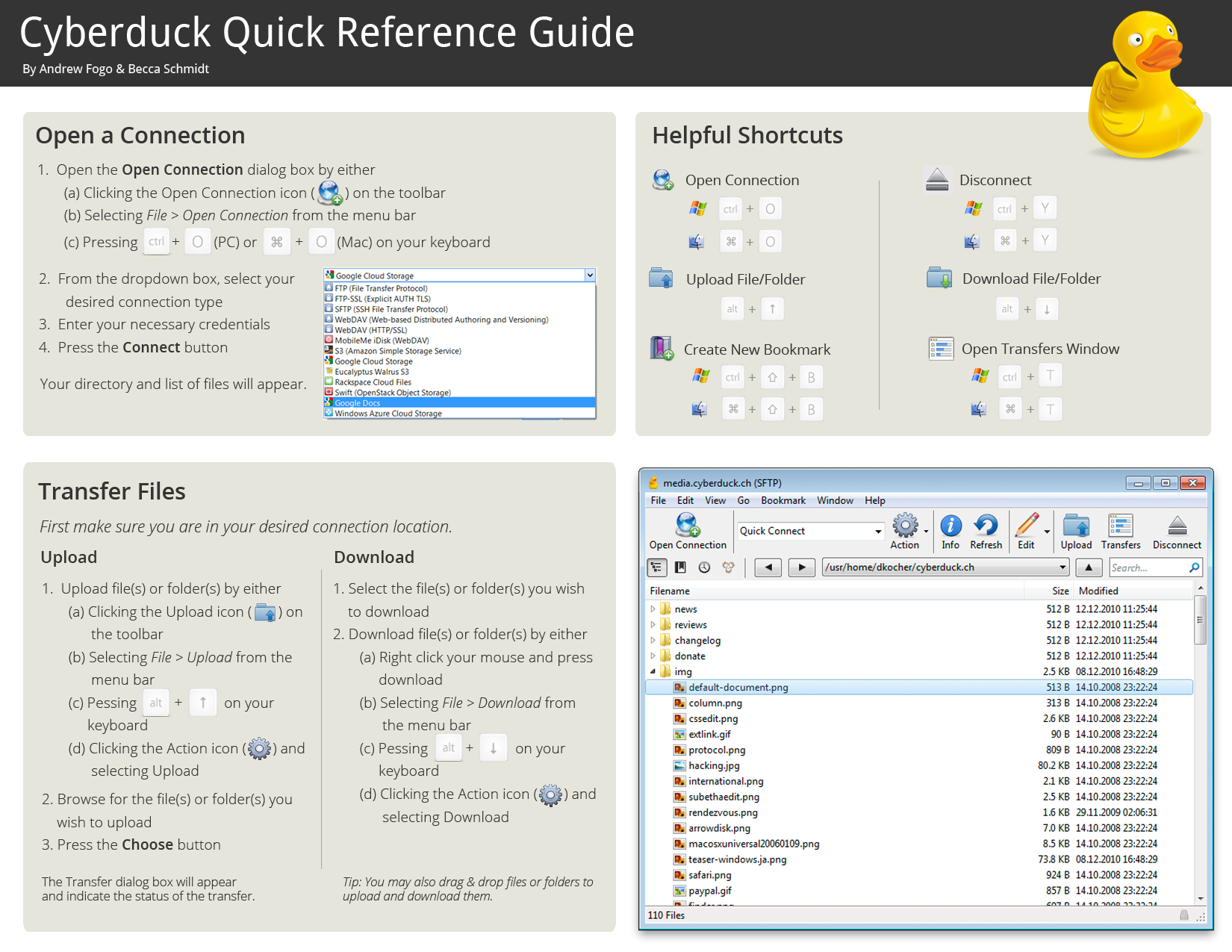
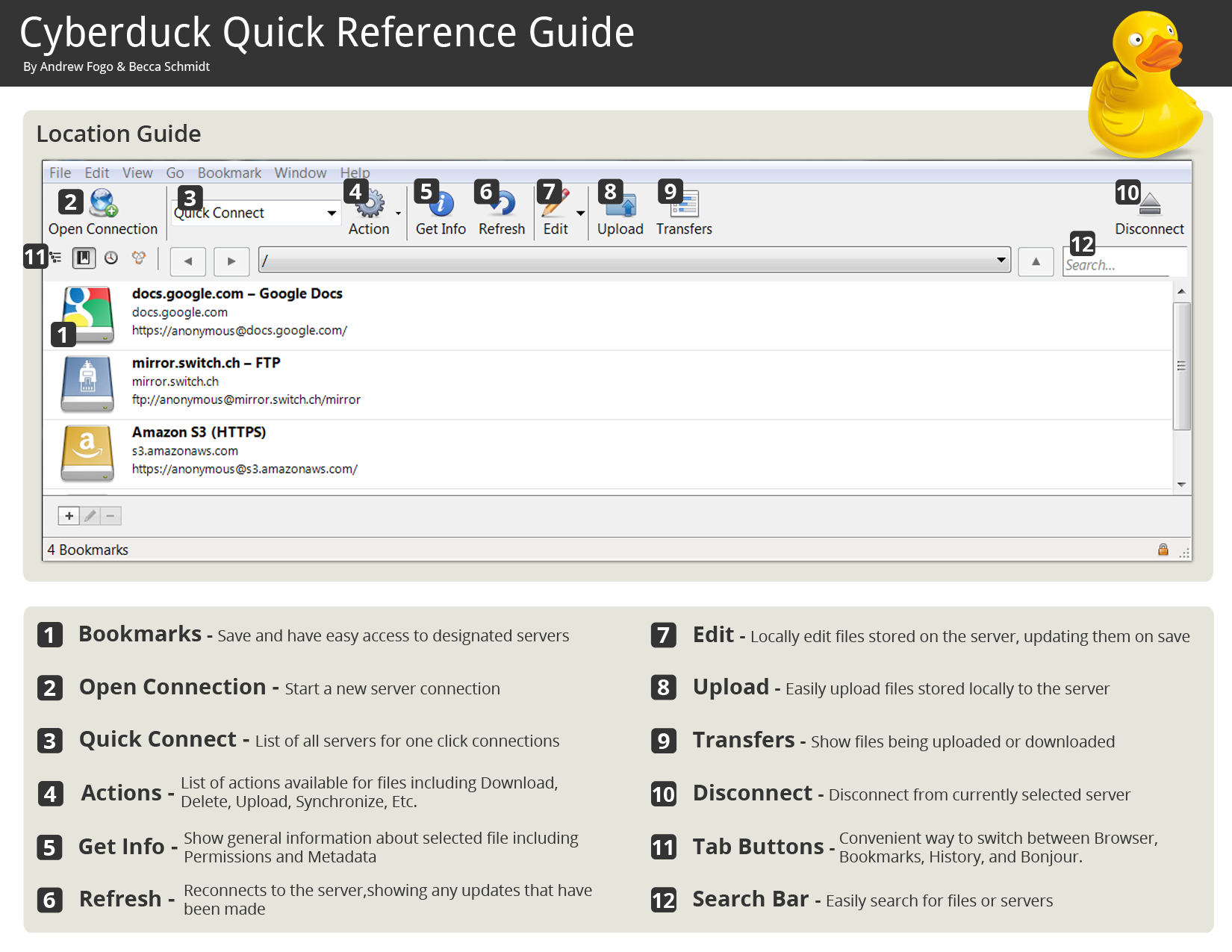
To improve the documentation on Cyberduck, Andrew Fogo & Becca Schmidt from University of Wisconsin have created some marvelous cheat sheets for Cyberduck.
· David Kocher · Posted in Cyberduck
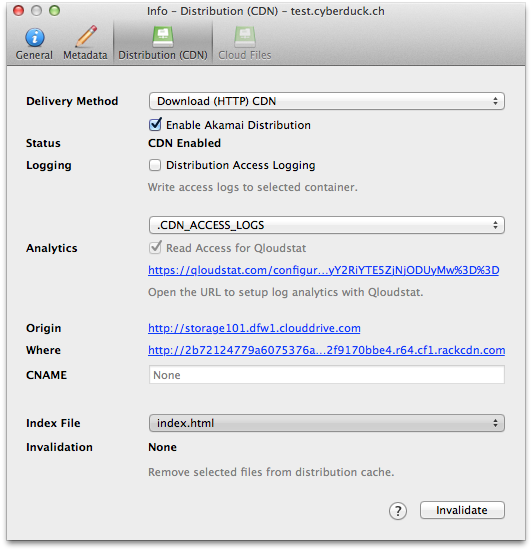
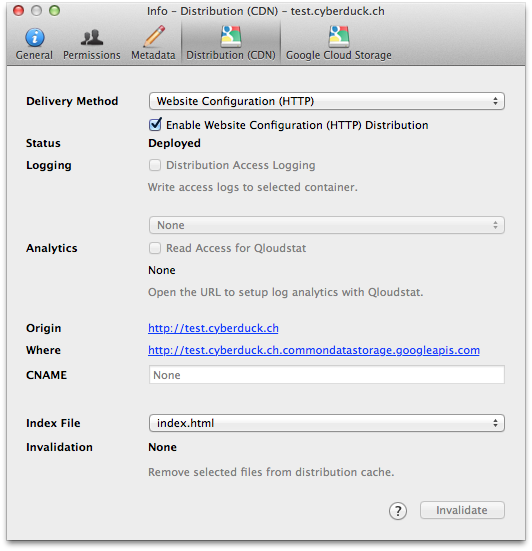
All cloud storage providers supported now allow the configuration of an index file that is delivered for a request to the root of path of content distribution. Previously this was supported only for CloudFront but is now available for Google Cloud Storage and Akamai distributions with Rackspace Cloudfiles as well in the latest snapshot build.
· David Kocher · Posted in Cyberduck
AWS S3 is continuing to introduce new features steadily. New bucket locations have been added in South America (São Paulo) and Asia Pacific (Sydney) regions which are supported in the latest snapshot builds for Mac and Windows. Also, Multi-Object Delete is supported for improved performance when deleting files in a bucket.
 Cyberduck
 Mountain Duck
 CLI